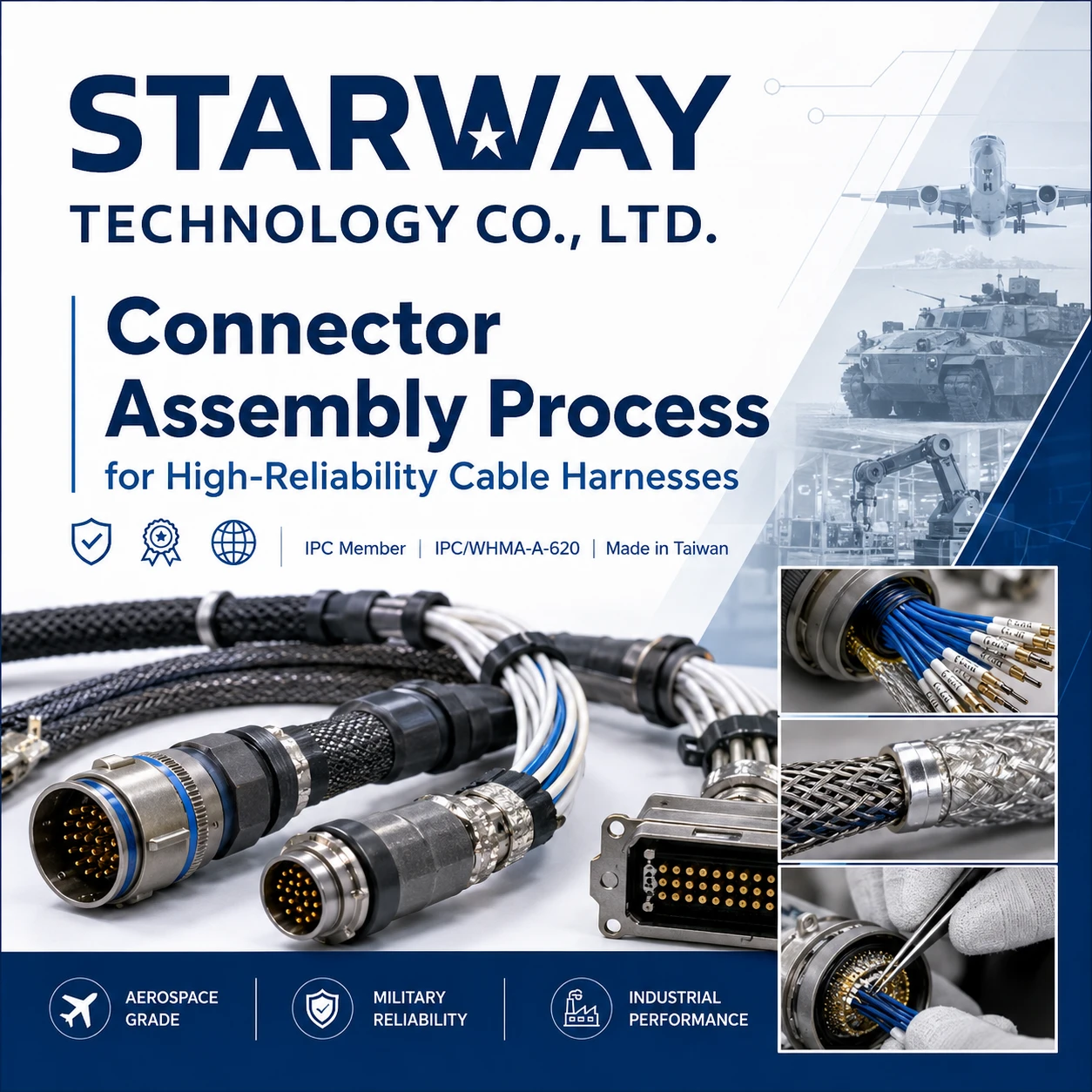
Connector Assembly Process for High-Reliability Cable Harnesses
Connector assembly process control is essential for high-reliability cable harnesses used in aerospace, military, industrial, RF, power, data, and harsh-environment applications. Starway Technology controls connectorization, contact preparation, crimping, soldered terminations, shielding, strain relief, overmolding, potting, continuity testing, insulation resistance testing, and final inspection through IPC-based workmanship thinking and Taiwan-based OEM production.
Connector Assembly Process for High-Reliability Cable Harnesses explains how connector assembly must be managed as a complete process, not as a simple final installation step. A reliable connectorized harness depends on correct connector selection, contact termination, cavity assignment, insertion depth, locking condition, backshell assembly, shielding termination, strain relief, environmental protection, electrical testing, and final inspection.
Starway Technology Co., Ltd. is a professional wire harness and cable assembly OEM manufacturer based in Taiwan. We support custom cable harness manufacturing, high-mix low-volume production, engineering samples, customer-specified connectors, connector assembly, crimping, soldered terminations, shielding, overmolding-related process coordination, continuity testing, insulation resistance testing, and project-based manufacturing for industrial, military, aerospace, communication, and high-reliability applications.
Certificate and Standard Reference
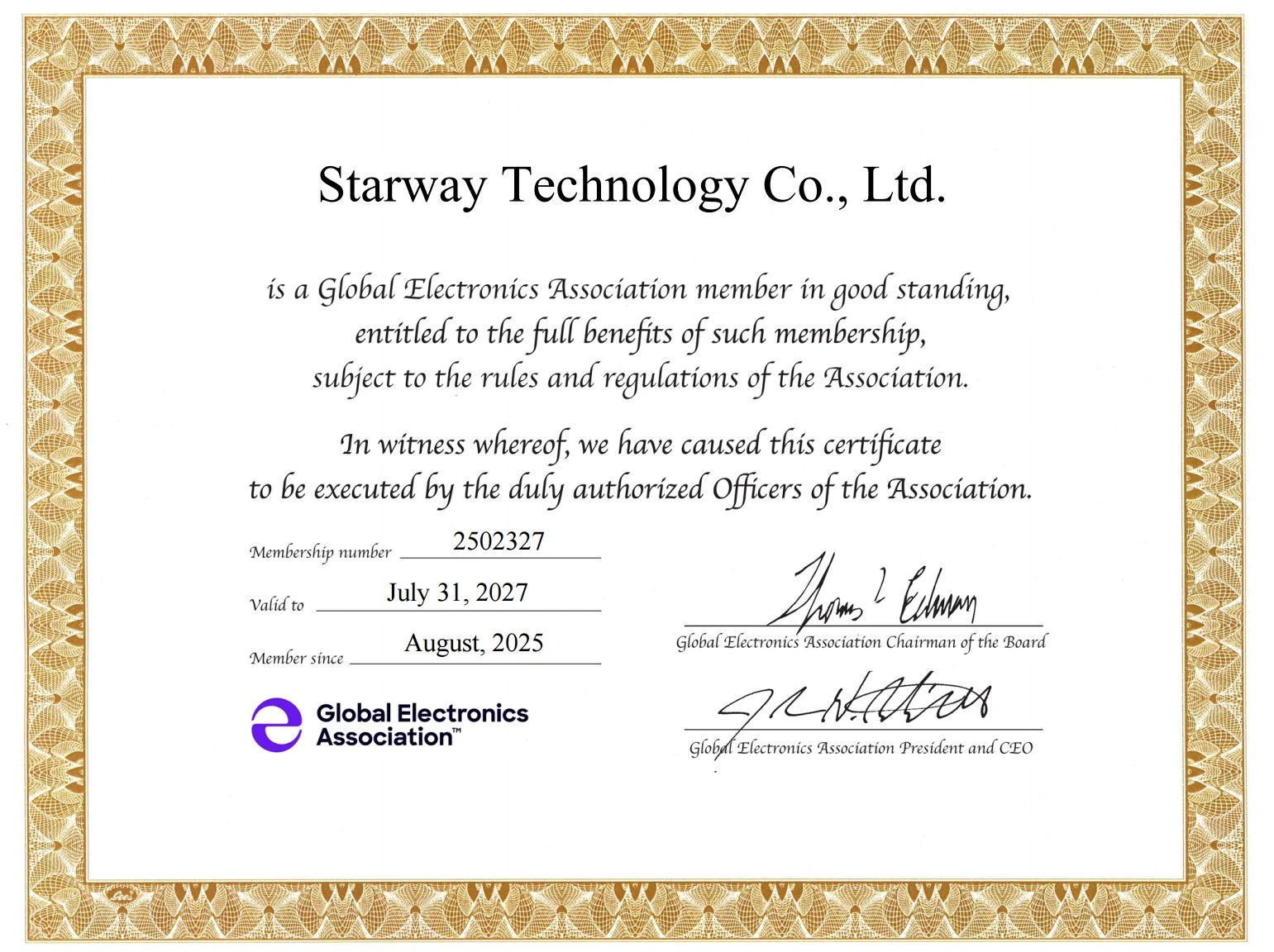
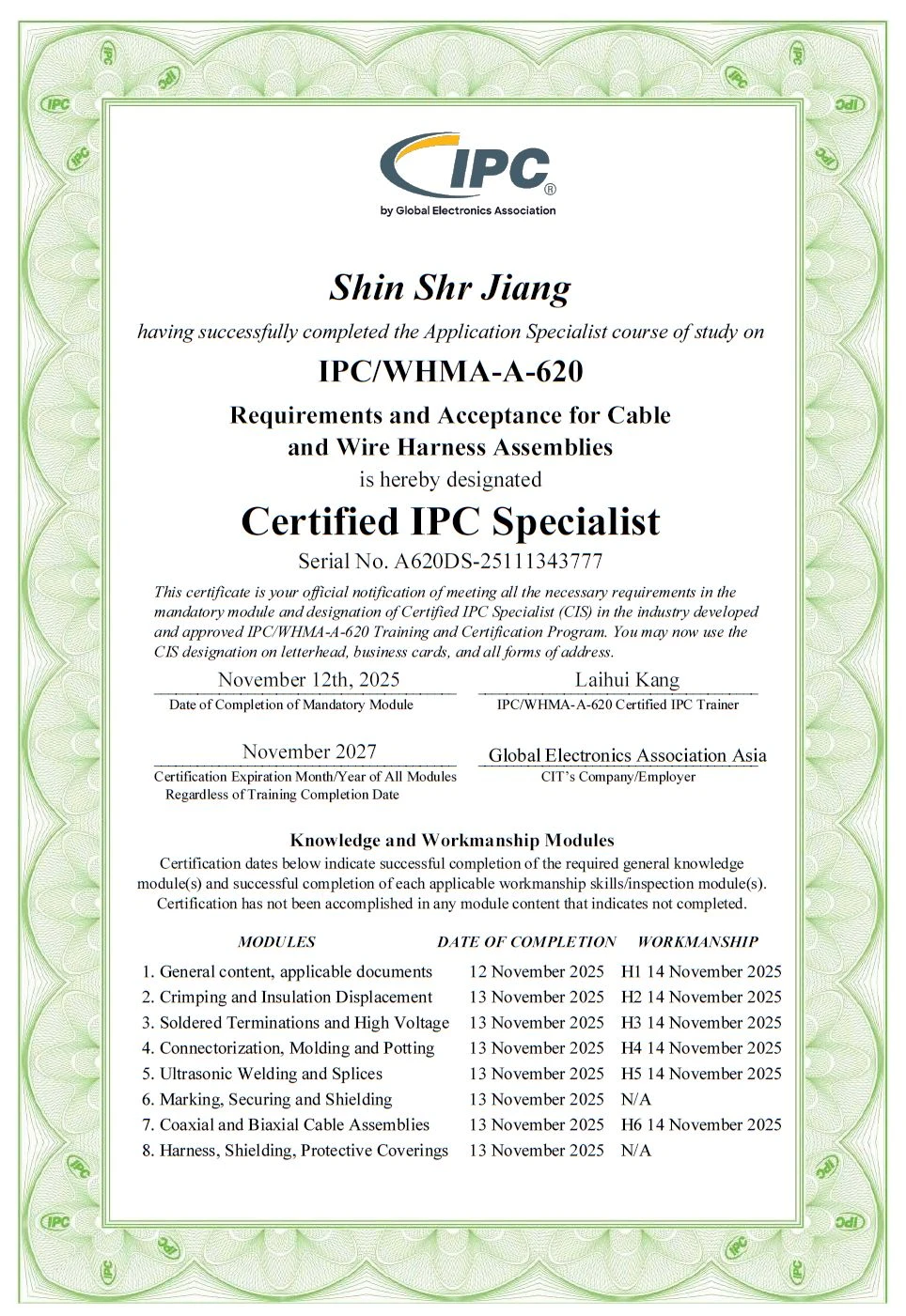
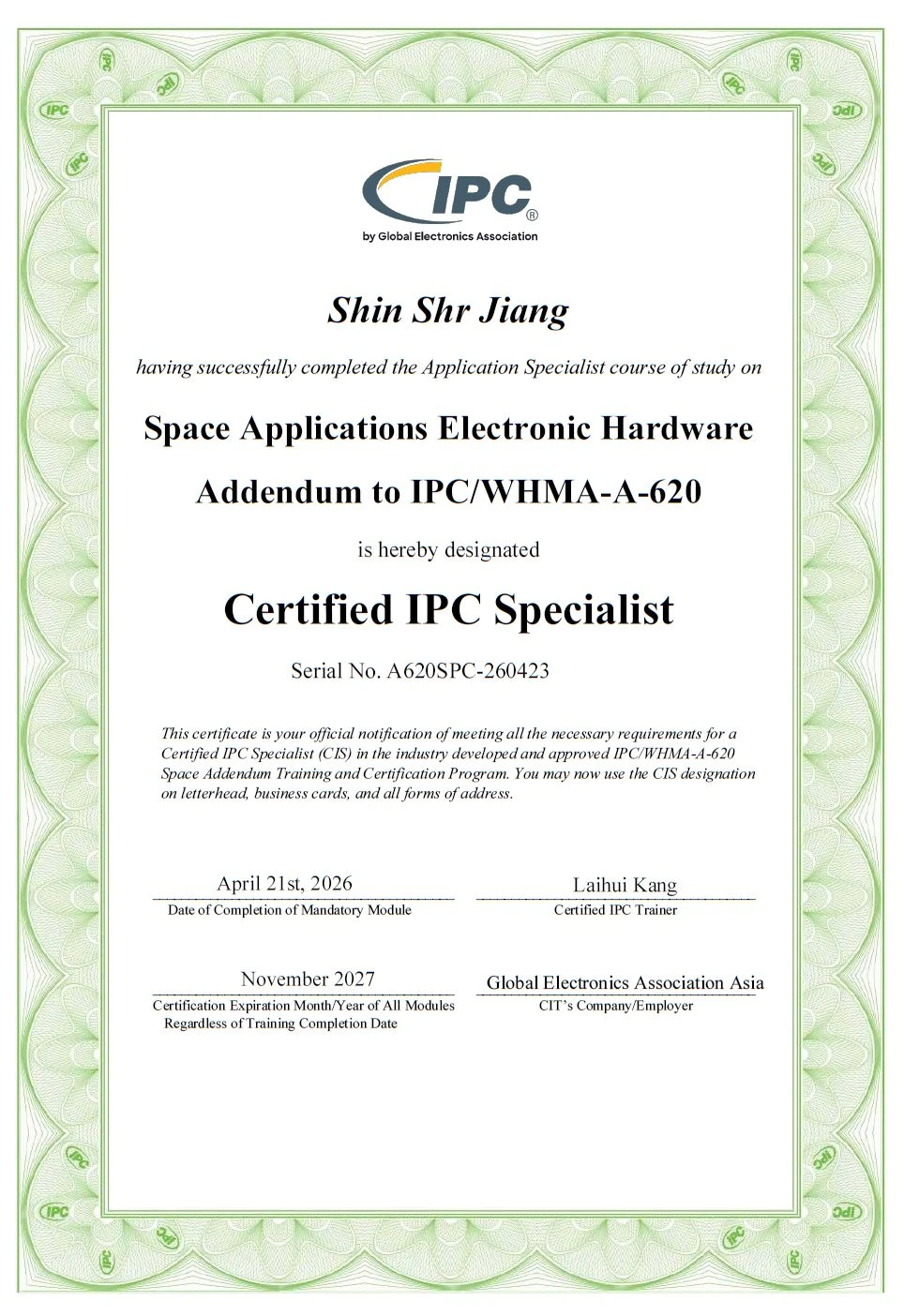
This article can display Starway Technology's IPC membership and IPC-related certificate references to support customer confidence in our connector assembly workmanship foundation and process-oriented manufacturing approach.
IPC Member
Starway Technology is listed in the official Global Electronics Association / IPC member directory as an OEM company, supporting our professional positioning in custom wire harness manufacturing.
IPC/WHMA-A-620
IPC/WHMA-A-620 is an important workmanship reference for wire preparation, connectorization, crimp terminals, soldered terminations, shielding, protective coverings, and testing.
IPC/WHMA-A-620E-S
IPC/WHMA-A-620E-S is a space and military applications addendum used with IPC/WHMA-A-620E for higher-reliability cable and wire harness applications.
Technical Reference Links
Starway Technology applies connector assembly and cable harness process-control principles aligned with the technical practices emphasized by leading interconnect manufacturers such as Amphenol CIT and Glenair. These public references show how high-reliability cable harnesses are often managed through engineering support, connectorization, shielding, overmolding, environmental protection, electrical testing, mechanical testing, and complete end-to-end manufacturing control.
This article does not claim that Starway Technology is Amphenol CIT or Glenair, nor does it imply formal approval by these manufacturers. Instead, it shows that Starway Technology uses a similar engineering language and process-control mindset when supporting custom connectorized cable harness projects.
- Amphenol CIT Cable Assembly and Harness Capability Reference
- Amphenol CIT Cable Assembly & Harness Capabilities emphasizes end-to-end manufacturing, engineering support, electrical testing, mechanical testing, environmental testing, overmolding capability, custom connector capability, and fully automated assembly testing.
- Glenair Turnkey Interconnect Assemblies Reference
- Glenair Turnkey Interconnect Assemblies Capability Guide highlights mission-critical cable assemblies, connector manufacturing integration, EMI/RFI shielding, environmental sealing, overmolding, conduit assemblies, fiber optic assemblies, and harsh-environment cable harness design.
Technical Summary
A high-reliability connectorized cable harness is not only a collection of wires and connectors. It is an engineered interconnect system where each connector interface must maintain stable electrical function, mechanical retention, environmental protection, shielding performance, routing integrity, and long-term service reliability.
Connector assembly process control must therefore include connector and contact review, wire preparation, crimping or soldered termination, contact insertion, cavity verification, retention check, backshell or strain relief installation, shielding termination, protective covering, overmolding or potting when required, continuity testing, insulation resistance testing, and final inspection.
For B2B customers, this means Starway Technology does not treat connector assembly as a simple plug-in operation. We treat it as a controlled manufacturing process that must balance function, fit, form, durability, shielding, environmental protection, and testing discipline.
Why Connector Assembly Process Control Matters
In high-reliability cable harnesses, the connector interface is often the point where electrical design, mechanical design, environmental sealing, shielding, routing, installation, and field service all meet. A harness can use high-quality connectors and still fail if the assembly process does not control contact insertion, pin assignment, backshell fit, strain relief, shield termination, or final electrical testing.
Electrical Reliability
Correct connector assembly helps maintain continuity, contact stability, insulation separation, signal integrity, power delivery, and low-risk circuit routing.
Mechanical Durability
Proper strain relief, backshell assembly, overbraid, conduit, or overmolded protection helps reduce stress at connector exits and wire junctions.
Environmental Protection
For harsh environments, sealing, potting, overmolding, protective coverings, and controlled assembly help reduce moisture, abrasion, chemical, and vibration-related risks.
Key Connector Assembly Control Points
Based on high-reliability interconnect manufacturing practice, connector assembly should be managed through defined control points from material review to final test release.
- Connector and Contact Review
- Connector series, shell size, contact arrangement, contact type, plating, sealing requirement, backshell, strain relief, and mating interface must be reviewed before production.
- Wire and Cable Preparation
- Wire cutting, stripping, shield preparation, jacket removal, conductor condition, and insulation condition must match connector and customer drawing requirements.
- Crimping or Soldered Termination
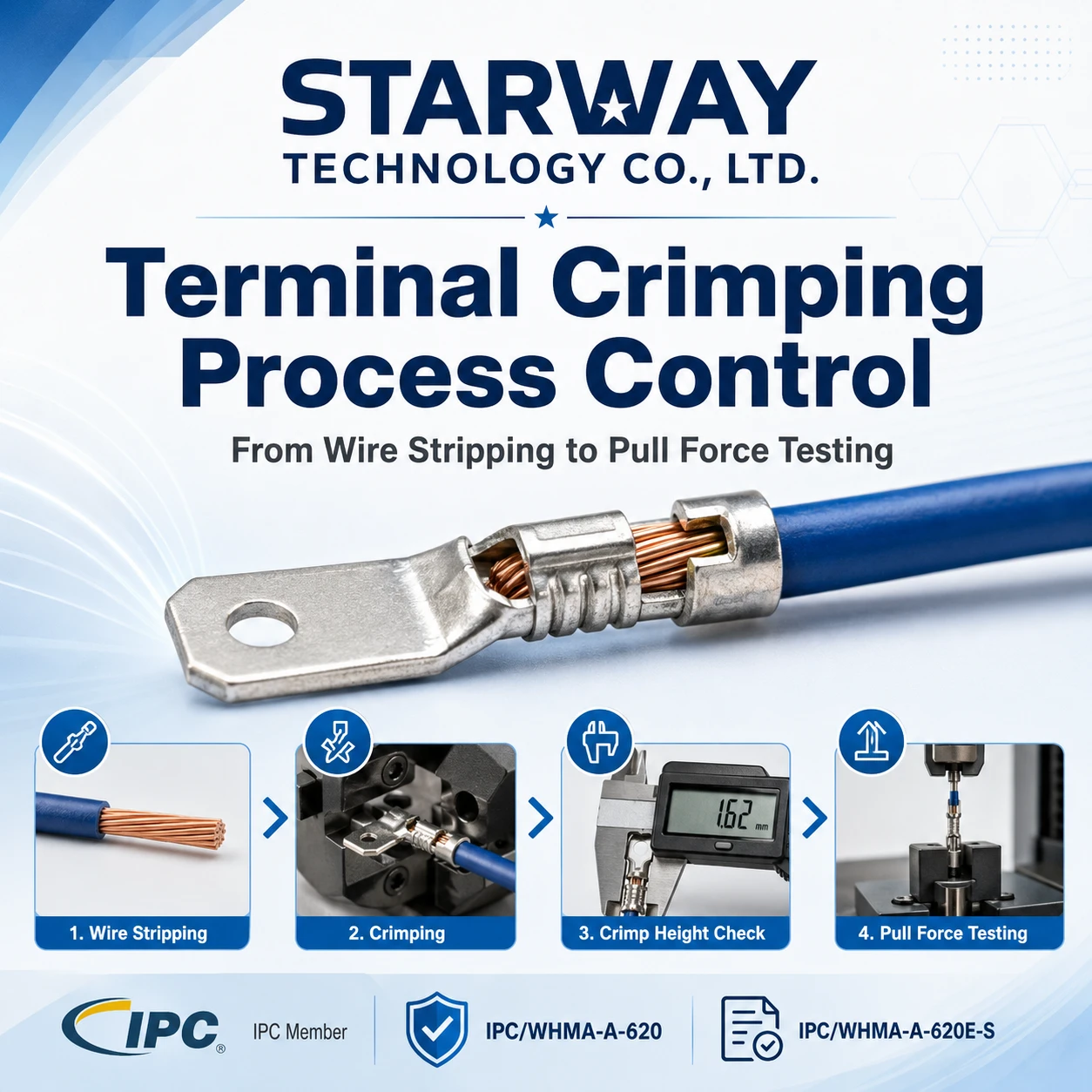
- Contacts may require crimping or soldered termination. The process must control conductor placement, solder condition, crimp height, pull strength, and workmanship appearance.
- Contact Insertion and Retention
- Contacts must be inserted into the correct cavity, locked properly, and verified to reduce the risk of wrong pinout, incomplete insertion, or intermittent contact.
- Shielding and Grounding
- Shield braid, foil, drain wire, banding, and grounding structures must be assembled carefully to support EMI/RFI control and long-term electrical performance.
- Strain Relief and Protection
- Backshells, boots, heat shrink, braid, conduit, overmolding, or potting may be used to reduce cable exit stress, abrasion, bending damage, and environmental exposure.
IPC Core Principle: Function, Fit, and Form
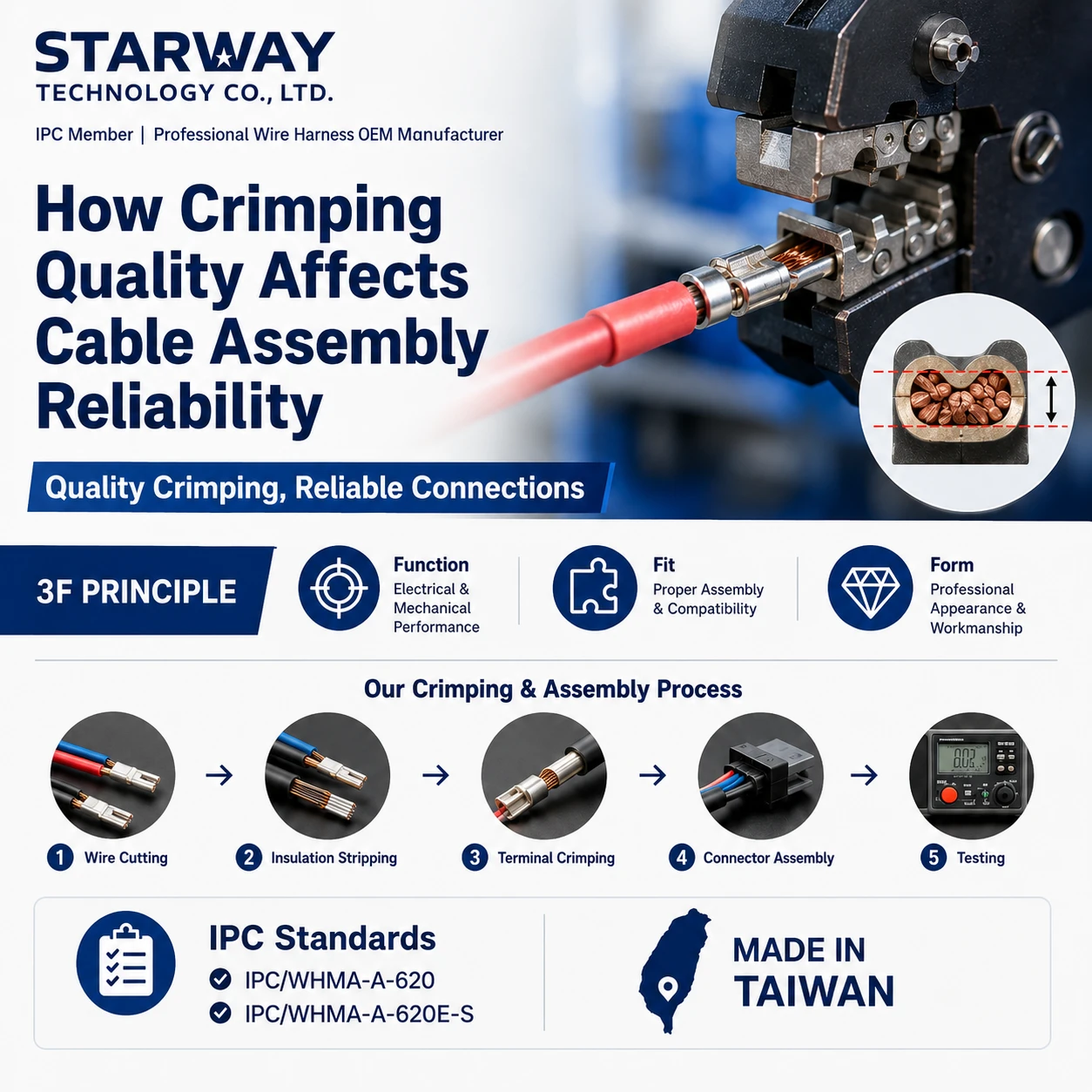
IPC workmanship thinking is closely connected with the practical quality concept of Function, Fit, and Form. Some customers may also describe the third principle as Formal / Appearance. For connector assembly, these three principles help evaluate whether the connectorized harness works electrically, fits mechanically, and maintains acceptable workmanship appearance.
Connector Assembly Process Flow
Starway Technology controls connector assembly as a complete process flow, from drawing review and material confirmation to connectorization, shielding, strain relief, testing, and final packaging.
Drawing and BOM Review
Customer drawings, connector part numbers, contact assignments, cable specifications, pinout, shielding requirements, and inspection criteria are reviewed.
Project PreparationIncoming Material Check
Connectors, contacts, backshells, seals, boots, wires, cables, sleeves, heat shrink, labels, and accessories are checked against the approved BOM.
Material ControlWire and Cable Preparation
Wires and cables are cut, stripped, jacket-prepared, shield-prepared, and arranged according to connector assembly requirements.
IPC/WHMA-A-620 ReferenceContact Termination
Contacts are crimped or soldered according to terminal type, connector system, wire size, customer drawing, and workmanship criteria.
Crimp / Solder ControlContact Inspection
Crimp height, pull strength, solder condition, insulation support, conductor condition, contact deformation, and cleanliness are reviewed when applicable.
In-Process InspectionConnectorization
Contacts are inserted into connector cavities according to pinout, orientation, insertion depth, locking condition, sealing requirement, and cavity assignment.
Connector AssemblyShielding and Grounding
Shield braid, foil, drain wire, conductive sleeves, grounding paths, or shield banding structures are assembled according to project requirements.
EMI/RFI ControlBackshell and Strain Relief
Backshells, boots, heat shrink, conduit, braid, or other strain relief components are assembled to protect the connector exit and cable transition.
Mechanical ProtectionOvermolding or Potting When Required
Overmolding or potting may be applied for environmental sealing, strain relief, termination protection, electrical isolation, and repeatable assembly performance.
Environmental ProtectionElectrical Testing
Continuity testing, pinout verification, open/short testing, contact assignment, insulation resistance testing, and hipot/DWV may be performed when required.
Electrical VerificationFinal Inspection
Finished harnesses are checked for function, fit, form, connector alignment, labeling, cable routing, protective covering, and cleanliness.
Final Quality ReviewPackaging and Shipment
Products are protected, labeled, packed, and released for shipment according to customer requirements to reduce connector, cable, and handling damage.
Shipment ControlHigh-Reliability Harness Features
Amphenol CIT and Glenair public capability documents both show that high-reliability cable harnesses often require more than simple point-to-point wiring. Depending on the application, connectorized assemblies may require RF or microwave cable integration, fiber optic assemblies, EMI/RFI shielding, environmental sealing, mechanical protection, overmolded boots, conduit systems, complex multibranch routing, and complete electrical verification.
- Multibranch Harness Routing
- Complex harnesses may include multiple branches, different connector interfaces, breakout points, cable transitions, labels, sleeves, and protective coverings.
- RF, Coaxial, and High-Speed Cable Handling
- RF, coaxial, twinaxial, high-speed, and data cables require careful length control, bend radius control, shielding continuity, and connector termination awareness.
- EMI/RFI Shielding Control
- Shielding material, braid handling, termination method, grounding path, and coverage must be controlled to support signal integrity and interference reduction.
- Environmental Sealing and Overmolding
- Overmolding, potting, boots, sealing accessories, and conduit systems may be used to protect connector exits and terminations from moisture, abrasion, chemicals, fuels, and mechanical stress.
- Mechanical and Environmental Reliability
- Shock, vibration, crush resistance, flex life, thermal stress, and harsh-environment exposure must be considered according to customer application requirements.
- Electrical Testing and Traceability
- Continuity, short/open testing, insulation resistance, hipot/DWV, pinout verification, and test records can support final release and customer confidence.
IPC/WHMA-A-620 and IPC/WHMA-A-620E-S Workmanship Awareness
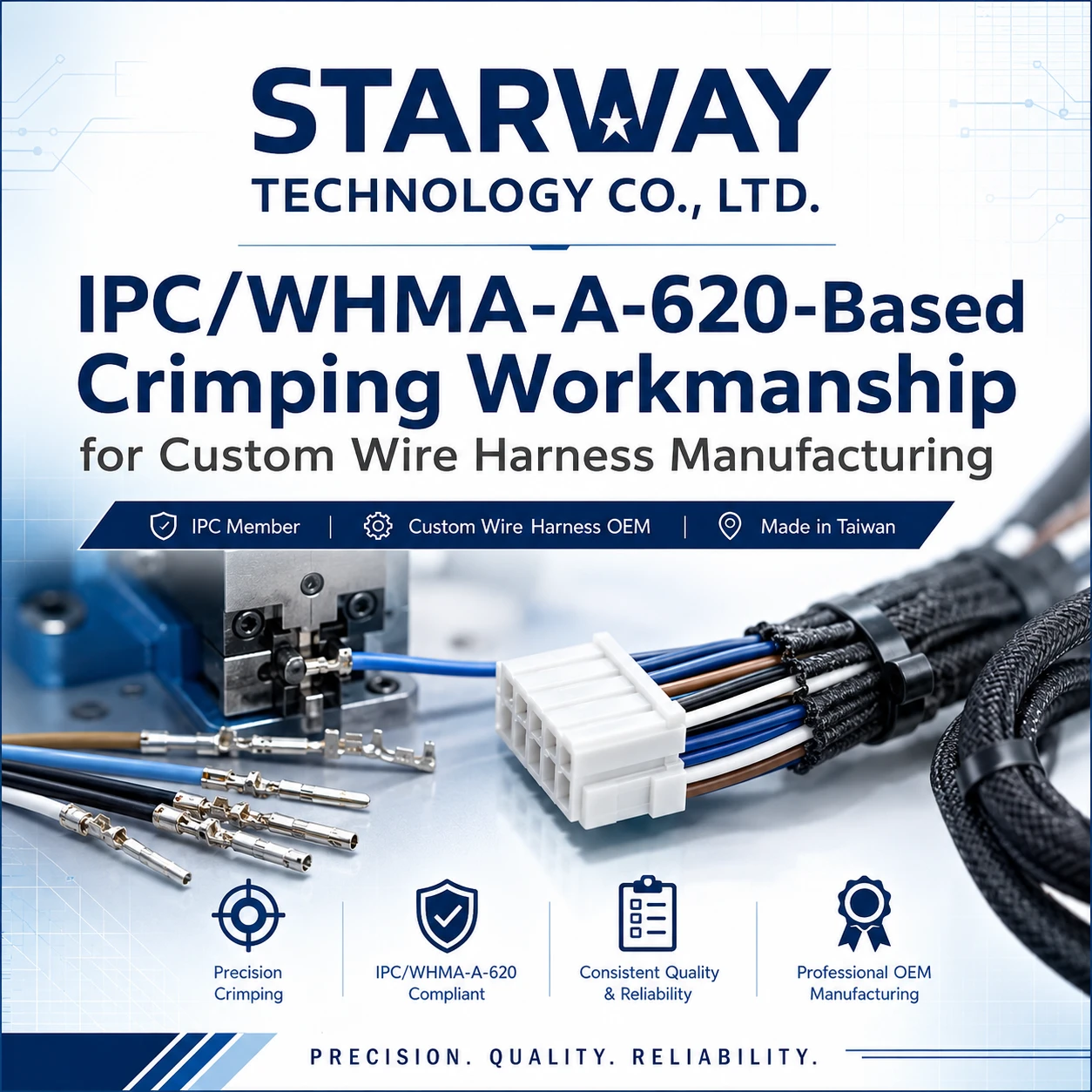
IPC/WHMA-A-620 is an important workmanship reference for cable and wire harness assemblies. It helps manufacturers and customers communicate more clearly about wire preparation, connectorization, crimp terminals, soldered terminations, shielding, protective coverings, marking, securing, and testing.
Common Connector Assembly Risks Reduced by Process Control
Connector assembly defects may not always be visible from the outside. A connectorized harness can look complete but still contain wrong pinout, incomplete contact insertion, weak shield termination, poor strain relief, or hidden electrical defects.
- Wrong Pinout or Cavity Assignment
- Incorrect contact placement can circuit errors, signal failure, polarity problems, or installation rework.
- Incomplete Contact Insertion
- Contacts that are not fully locked may cause intermittent contact, pullout, or mating reliability problems.
- Poor Shield Termination
- Incomplete shield coverage, loose braid handling, or poor grounding can reduce EMI/RFI protection and affect signal integrity.
- Weak Strain Relief
- Poor backshell, boot, heat shrink, or cable exit control may allow bending stress to concentrate at the connector termination area.
- Environmental Sealing Failure
- Incorrect sealing, potting, or overmolding control may expose the connector interface to moisture, chemicals, fuel, dust, or mechanical damage.
- Insufficient Electrical Verification
- Without proper continuity, pinout, open/short, and insulation resistance testing, hidden circuit defects may reach the customer.
Starway Technology: Taiwan-Based Custom Wire Harness OEM Manufacturer
Starway Technology focuses on custom wire harness and cable assembly OEM manufacturing. We are suitable for customers who need small-batch production, high-mix low-volume builds, engineering samples, special connector processing, custom cable assemblies, high-reliability cable harnesses, and stable Taiwan-based production support.
Custom Connectorized Harnesses
We manufacture cable harnesses based on customer drawings, samples, BOMs, connector requirements, wire specifications, routing needs, and project-specific production notes.
High-Mix Low-Volume
We support prototype builds, engineering samples, low-volume production, customized assemblies, and repeat project-based manufacturing.
Made in Taiwan
Taiwan-based production helps customers maintain direct communication, flexible coordination, responsive engineering discussion, and better process visibility.
Customer Value
For B2B customers, connector assembly process control directly affects field reliability, installation efficiency, signal stability, environmental durability, quality consistency, warranty risk, and customer confidence. A cable assembly supplier that understands connectorization, shielding, strain relief, backshell assembly, overmolding, protective coverings, and electrical verification can help reduce hidden risks in high-reliability wire harness manufacturing.
Starway Technology supports customers with IPC membership, IPC/WHMA-A-620 workmanship awareness, IPC/WHMA-A-620E-S space and military addendum awareness, custom wire harness OEM manufacturing, high-mix low-volume flexibility, connector assembly process control, and Taiwan-based production.
FAQ
Q1: What is connector assembly process control?
It is the controlled management of connector selection, contact termination, contact insertion, cavity assignment, shielding, backshell assembly, strain relief, protective covering, electrical testing, and final inspection.
Q2: Why is connectorization important for high-reliability cable harnesses?
Connectorization directly affects circuit correctness, mating reliability, contact retention, signal integrity, environmental sealing, mechanical durability, and final installation quality.
Q3: Is Starway Technology an IPC member?
Yes. Starway Technology is listed in the official Global Electronics Association / IPC member directory as an OEM company.
Q4: Does Starway use IPC/WHMA-A-620?
Starway uses IPC/WHMA-A-620-based workmanship awareness as a reference for cable and wire harness assembly, including wire preparation, connectorization, crimp terminals, soldered terminations, shielding, protective coverings, and testing.
Q5: What is IPC/WHMA-A-620E-S?
IPC/WHMA-A-620E-S is the Space and Military Applications Electronic Hardware Addendum used together with IPC/WHMA-A-620E for higher-reliability cable and wire harness applications.
Q6: Does Starway claim to be formally approved by Amphenol CIT or Glenair?
No. Starway Technology references public technical documents from leading interconnect manufacturers to explain professional connector assembly and cable harness process-control principles. Actual manufacturing acceptance follows customer drawings, approved BOMs, connector specifications, terminal specifications, cable specifications, inspection plans, and project-specific agreements.
Q7: Can Starway support high-mix low-volume cable assembly production?
Yes. Starway supports engineering samples, prototypes, customized assemblies, small-batch production, high-mix low-volume projects, and repeat OEM manufacturing.
Q8: Is Starway's production based in Taiwan?
Yes. Starway Technology provides Taiwan-based wire harness and cable assembly OEM manufacturing, supporting customers who need flexible production, direct communication, and professional process control.
SEO Keywords
Connector Assembly Process for High-Reliability Cable Harnesses, connector assembly process control, connectorized cable harness, high-reliability cable assembly, custom wire harness manufacturing, cable assembly OEM Taiwan, connectorization, backshell assembly, strain relief, EMI RFI shielding, overmolding, potting, continuity testing, insulation resistance testing, IPC/WHMA-A-620, IPC/WHMA-A-620E-S Space and Military Applications Electronic Hardware Addendum, IPC member OEM, Amphenol CIT cable assembly reference, Glenair turnkey interconnect assemblies reference, Starway Technology
Hashtags
Suggested hashtags for article pages, social posts, exhibition content, and SEO support: