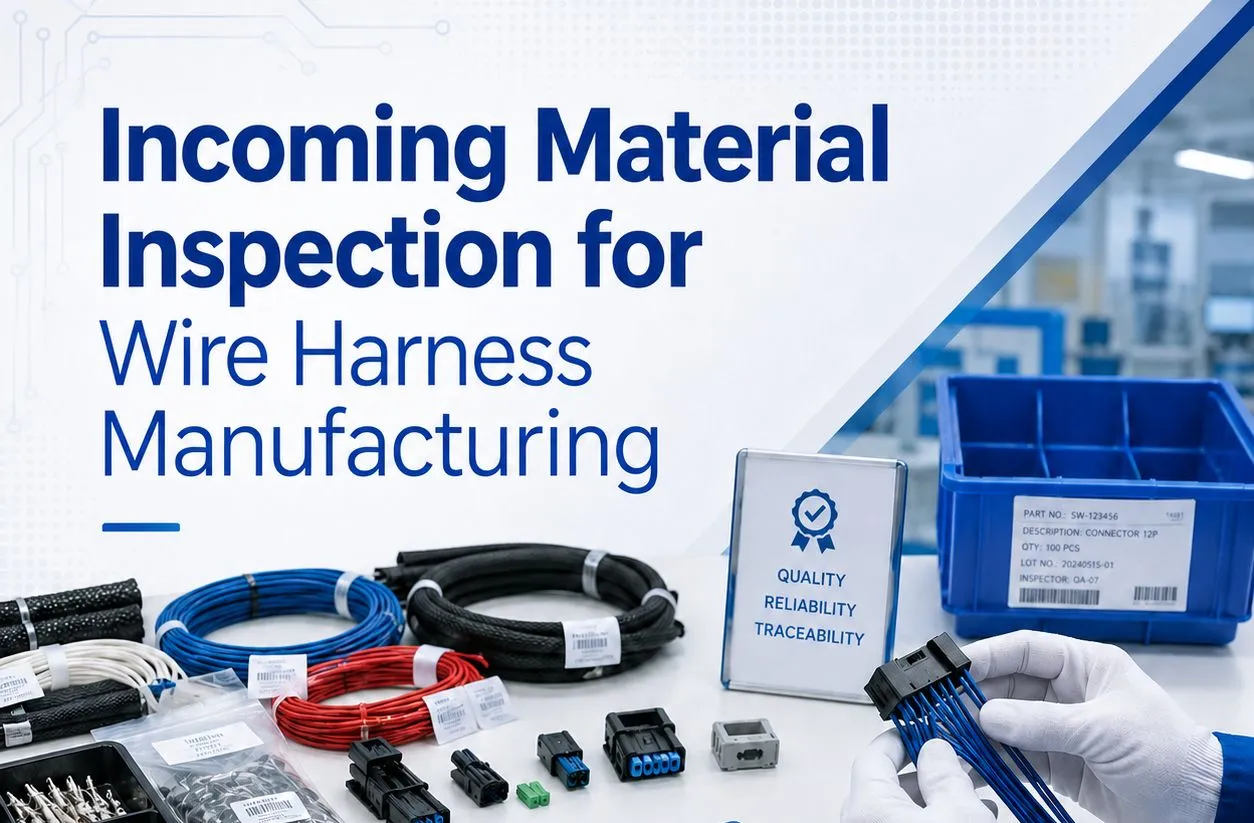
Incoming Material Inspection for Wire Harness Manufacturing
Verifying wires, connectors, terminals, sleeves, labels, BOM details, drawings, and project requirements before custom wire harness production begins.
Incoming material inspection for wire harness manufacturing is the process of checking wires, connectors, terminals, contacts, sleeves, labels, protective materials, and related components before production starts. The goal is to confirm that received materials match customer drawings, BOM details, revision requirements, project notes, and manufacturing specifications.
For custom wire harness projects, this early inspection step helps reduce wrong-material risk, prevent connector or terminal mismatch, improve production consistency, and support traceable manufacturing records.
Technical Summary
Starway Technology provides custom wire harness manufacturing support with incoming material inspection, project-based document review, component verification, and traceable production control. Before harness assembly begins, wires, connectors, terminals, sleeves, labels, and accessories are checked against customer drawings, BOM details, revision levels, and project-specific requirements.
This inspection approach supports IPC/WHMA-A-620-based workmanship thinking by helping manufacturers control material suitability before cutting, stripping, crimping, assembly, and final testing. For aerospace, defense, industrial automation, advanced communications, and other high-reliability applications, incoming inspection is a practical first step in reducing preventable assembly defects.
Why Incoming Material Inspection Matters
In custom wire harness manufacturing, quality control starts before cutting, stripping, crimping, soldering where applicable, connector assembly, or final electrical testing. Incorrect wire specifications, connector mismatches, terminal incompatibility, unclear revision status, missing accessories, or incomplete lot information may cause production delays, quality variation, and repeat manufacturing problems.
Starway Technology Co., Ltd. applies IPC-based workmanship thinking and project-specific inspection control to reduce wrong-material risk from the earliest production stage.
Material Verification
Wires, connectors, terminals, sleeves, labels, protective materials, and related accessories are checked before production.
Drawing and BOM Control
Inspection is performed against customer drawings, BOM details, revision levels, project notes, and production specifications.
Traceable Records
Material check records can support production review, troubleshooting, quality control, and repeat manufacturing.
What We Check Before Production
Incoming material inspection confirms whether the required components are suitable for the project before wire harness production begins.
- Wires and Cables
- Visual inspection and dimensional checks may include wire type, AWG/mm2, color, insulation condition, wire marking, conductor condition, and project-specific wire requirements.
- Connectors
- Connector part numbers, mating interface, orientation, locking features, cavity layout, visible damage, and packaging condition are reviewed before assembly.
- Terminals and Contacts
- Terminal part numbers, manufacturing date, visual condition, packaging damage, plating condition, gold plating location, oxidation, conductor crimp area, and insulation crimp area may be checked based on the project requirement.
- Sleeves, Labels, and Accessories
- Heat shrink tubing, braided sleeving, labels, markers, protective materials, grommets, clips, and related components are verified for specification and usability.
- BOM and Drawing Review
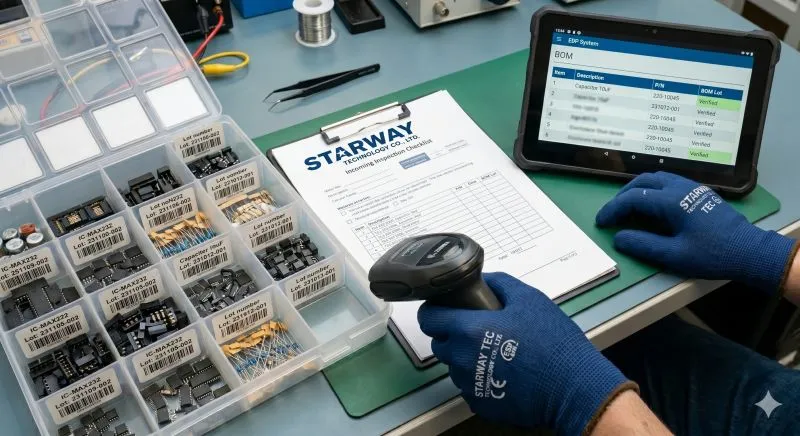
- Customer name, project name, product name, BOM details, drawing number, revision level, project notes, and production document consistency are reviewed before production release.
- Lot and Supplier References
- Material lot references, supplier information, and receiving records can be maintained where required by customer specifications to support traceable production control.
Common Risks Found During Incoming Inspection
Wrong or Similar Part Numbers
Similar connector or terminal part numbers may look correct at first glance but mating, crimping, or assembly issues during production.
Unclear Drawing Revision
A mismatched drawing or BOM revision can cause production to follow outdated specifications, especially in repeat orders or engineering change cases.
Wire Size or Color Mismatch
Incorrect AWG, insulation color, wire marking, or material type can affect assembly accuracy, identification, and final inspection.
Terminal Plating or Surface Issues
Oxidation, plating inconsistency, deformation, or packaging damage may affect contact reliability and crimp quality.
IPC-Based Workmanship Approach
As an IPC Association member, Starway Technology applies IPC-based workmanship principles across custom wire harness manufacturing, including material handling, process preparation, crimping control, assembly inspection, soldering where applicable, and final quality review.
Relevant workmanship references may include IPC/WHMA-A-620 for cable and wire harness assemblies, IPC/WHMA-A-620 space and military application addendum references where specified by the customer, IPC-A-610 for electronic assembly acceptance criteria, and J-STD-001 for soldered electrical and electronic assemblies where applicable.
These references do not replace customer drawings or project specifications. Instead, they provide a workmanship framework that helps strengthen inspection awareness, assembly control, and communication between the customer and manufacturer.
Customer Value
Controlled incoming material inspection helps customers reduce wrong-material risk, improve production consistency, and support repeat manufacturing for custom wire harness projects. This approach is especially useful for aerospace, defense, industrial automation, advanced communications, and other high-reliability applications where stable electrical and mechanical connections are critical.
Starway Technology Quality Summary
FAQ
What is incoming material inspection in wire harness manufacturing?
Incoming material inspection is the process of checking wires, connectors, terminals, sleeves, labels, and related components before production begins to confirm alignment with customer drawings, BOM details, revision levels, and project requirements.
Why is incoming inspection important for custom wire harnesses?
It helps reduce wrong-material risk before cutting, stripping, crimping, connector assembly, and electrical testing. This improves production consistency and reduces avoidable quality variation.
Does Starway use IPC standards for incoming material inspection?
Starway applies IPC-based workmanship thinking as a reference for process control, inspection awareness, assembly quality, and traceable manufacturing, including references such as IPC/WHMA-A-620 where applicable.
What materials are usually checked before wire harness production?
Common inspection items include wires, cables, connectors, terminals, contacts, heat shrink tubing, braided sleeves, labels, markers, protective materials, BOM details, drawings, and lot references.