Solar PV systems depend on more than photovoltaic modules and inverters. Reliable wire harnesses, cable assemblies, connectors, and interconnect workmanship are essential for long-term energy output, safety, and system availability.
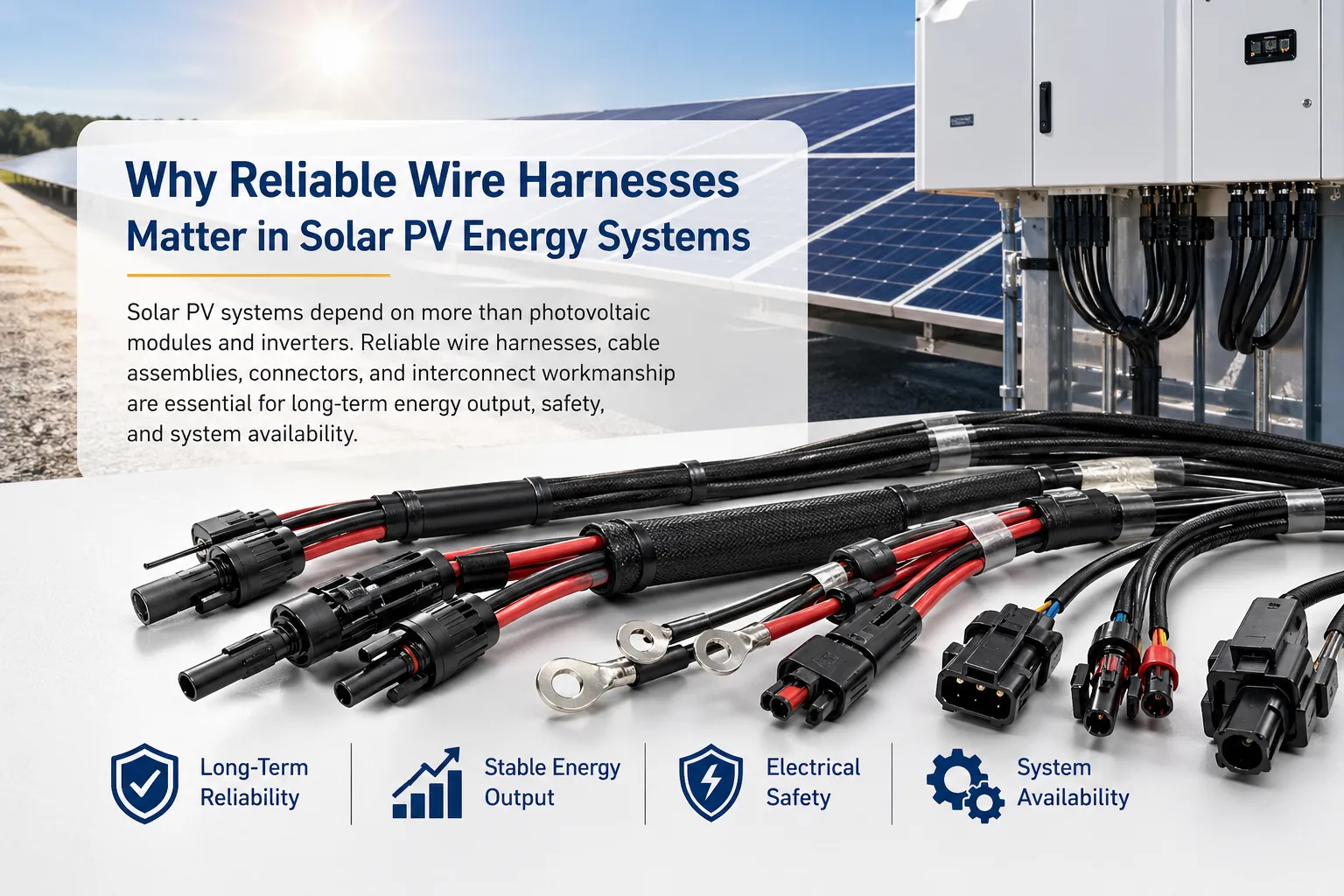
Solar photovoltaic systems are becoming a major part of global renewable energy infrastructure. As solar PV installations expand across utility-scale plants, commercial rooftops, residential systems, and hybrid energy storage projects, the reliability of every electrical connection becomes more important.
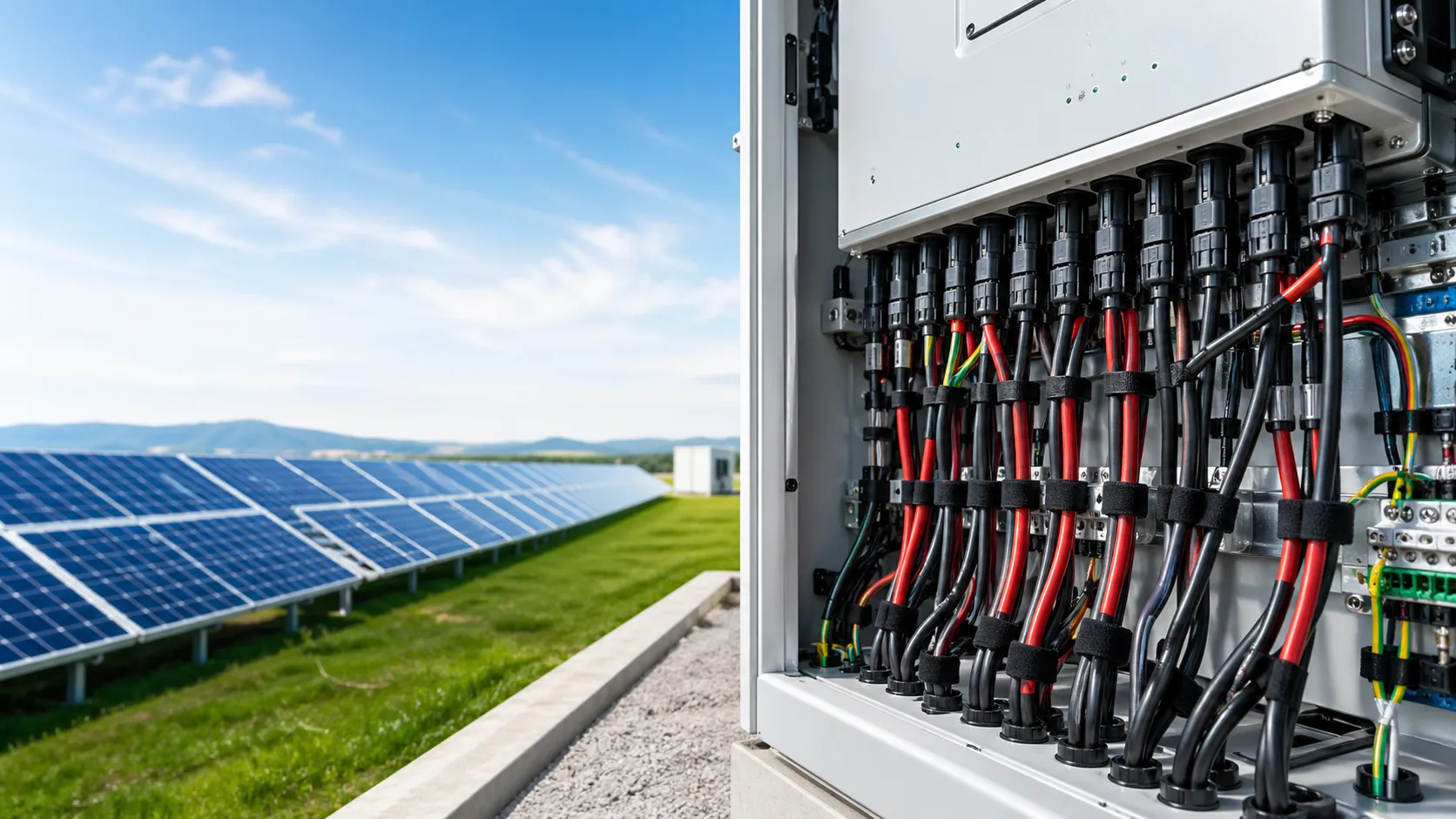
While solar panels and inverters often receive the most attention, wire harnesses, cable assemblies, connectors, and interconnect interfaces play a critical role in transmitting power, signals, and monitoring data throughout the system. A weak cable connection, poor crimp, unsuitable connector, or damaged cable jacket can reduce energy output, increase maintenance cost, and safety risk.
For solar PV manufacturers, system integrators, EPC companies, and energy infrastructure suppliers, reliable wiring is not a small detail. It is part of the electrical backbone of the entire solar energy system.
Why Wire Harness Reliability Is Critical in Solar PV Systems
Solar PV systems are expected to operate for many years in outdoor environments. This makes wire harness reliability different from ordinary indoor electronics. Cable assemblies must support electrical performance, mechanical durability, insulation integrity, and stable connections over long operating periods.
Long Outdoor Service Life
Solar PV wiring may be exposed to heat, sunlight, moisture, dust, wind, and repeated temperature changes over years of operation.
System Availability
Cable and connector issues can reduce energy generation, trigger maintenance work, or cause parts of a PV system to go offline.
Electrical Safety
Proper insulation, termination quality, routing, and connector compatibility help reduce the risk of overheating, arcing, and unstable connections.
Where Wire Harnesses Are Used in Solar PV Energy Systems
A solar PV system includes multiple layers of electrical interconnection. Each layer may require different cable assembly designs depending on current level, voltage, installation environment, monitoring requirements, and customer specifications.
| Solar PV Area |
Wire Harness / Cable Assembly Role |
Reliability Considerations |
| PV Module Interconnection | Connects modules and strings to transmit generated DC power. | Connector compatibility, contact resistance, cable jacket durability, UV exposure, and outdoor insulation stability. |
| Combiner Boxes | Aggregates multiple PV strings and connects them to downstream power conversion equipment. | Secure termination, correct wire sizing, routing discipline, insulation spacing, and electrical testing. |
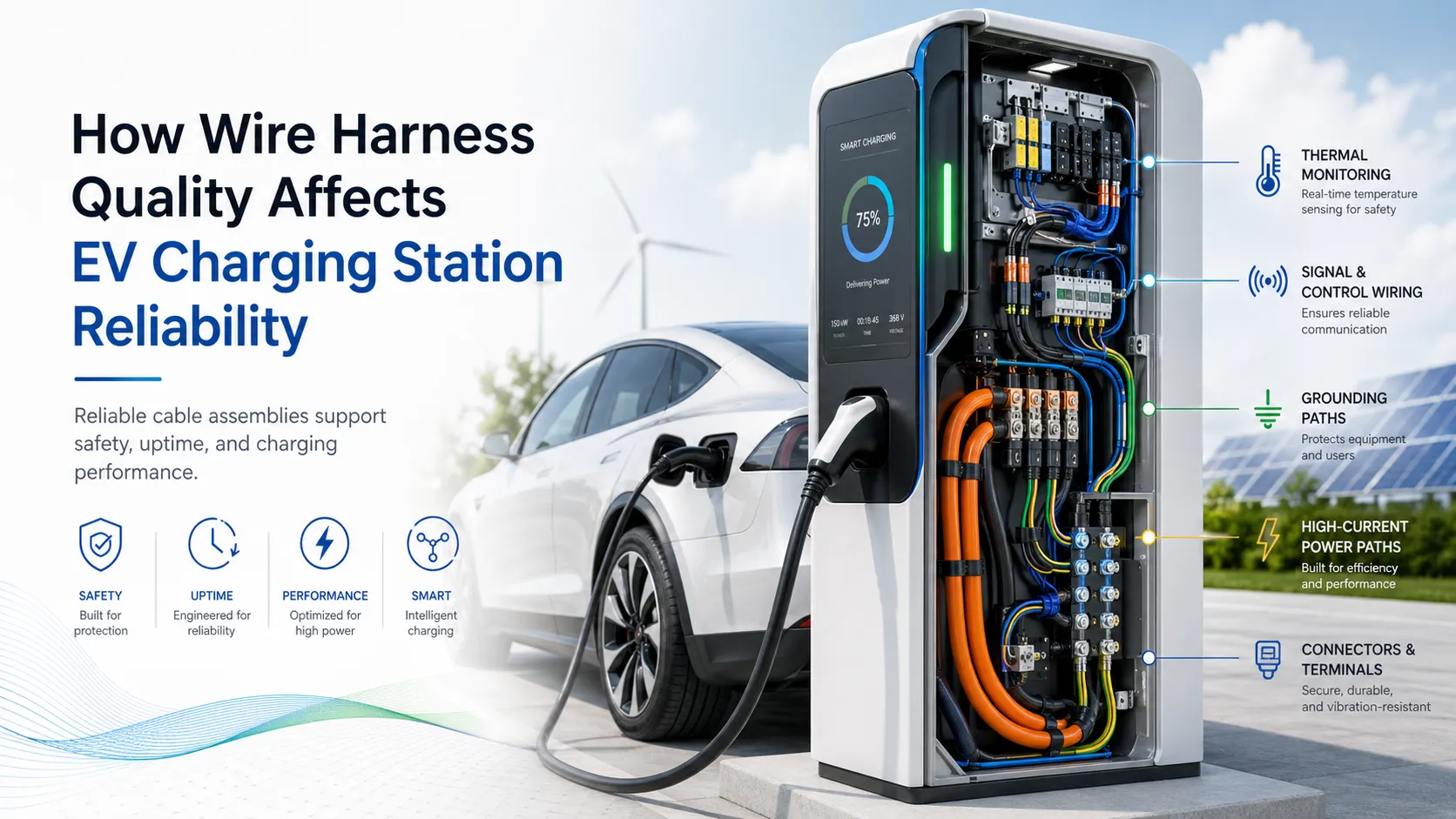
| Solar Inverters | Supports power, control, signal, grounding, and internal interconnect wiring. | Thermal management, vibration resistance, signal integrity, strain relief, and assembly consistency. |
| Monitoring and Control Systems | Connects sensors, data acquisition devices, communication modules, and power monitoring equipment. | Stable signal transmission, connector retention, shielding where applicable, and clear identification. |
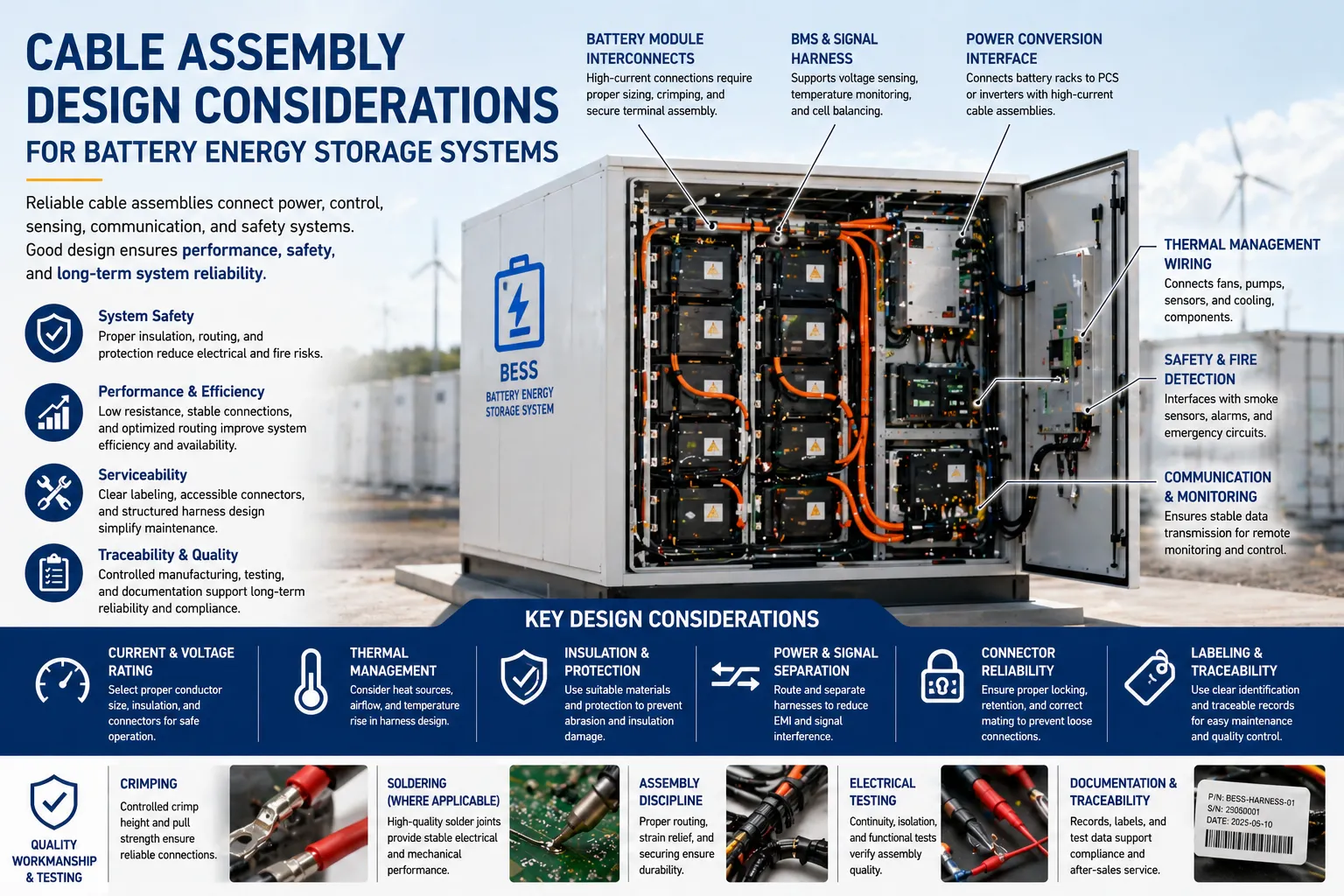
| Hybrid Solar + Storage Systems | Interfaces with battery energy storage systems, BMS wiring, control cabinets, and power management units. | High-current routing, insulation, separation of signal and power wiring, thermal risk, and traceable assembly control. |
Common Reliability Challenges in Solar PV Cable Assemblies
Many solar PV wiring issues are not caused by the solar module itself. They often come from installation quality, connector mismatch, cable damage, poor termination, insufficient strain relief, or long-term environmental degradation.
Connector Compatibility
PV connectors should be selected and assembled according to the required mating system. Poor matching may increase resistance and reduce connection reliability.
Cable Jacket Degradation
Outdoor cable jackets can be affected by sunlight, heat, moisture, abrasion, or environmental aging, compromising insulation protection.
Improper Termination
Over-stripped conductors, poor crimping, incorrect torque, or inadequate strain relief can electrical and mechanical weak points.
Thermal Stress
High ambient temperature and electrical loading may increase stress on terminals, connectors, insulation, and nearby components.
Moisture and Dust
Outdoor PV systems require attention to sealing, routing, connector protection, and contamination control to maintain long-term stability.
Maintenance Accessibility
Clear labeling, routing, and traceable cable assembly design help technicians inspect, maintain, and replace components more efficiently.
IPC-Based Workmanship Thinking for Solar PV Interconnects
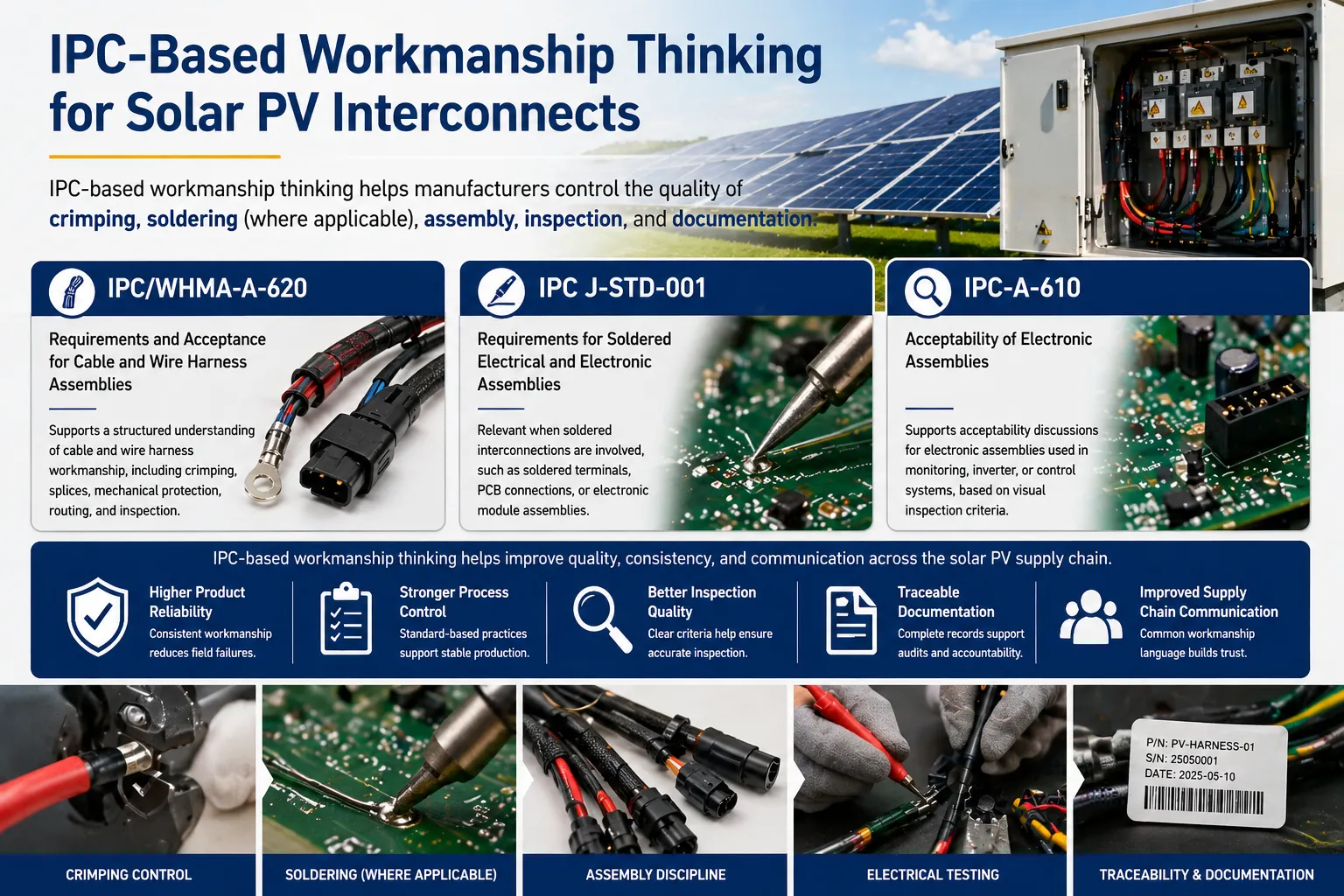
Solar PV cable assemblies may not always be specified directly by IPC standards, because system-level solar requirements often depend on customer drawings, product safety standards, connector specifications, and project requirements. However, IPC-based workmanship thinking remains valuable because it helps manufacturers control the quality of crimping, soldering where applicable, assembly, inspection, and documentation.
For wire harness and cable assembly manufacturers, IPC/WHMA-A-620 supports a structured understanding of cable and wire harness workmanship, while IPC J-STD-001 is relevant when soldered electrical or electronic interconnections are involved. IPC-A-610 may also support acceptability discussions for electronic assemblies used in monitoring, inverter, or control systems.
Controlled Crimping
Helps ensure terminals, conductors, insulation support, and mechanical retention are evaluated through consistent workmanship expectations.
Assembly Discipline
Supports clear procedures for wire preparation, routing, labeling, insulation protection, and final assembly review.
Quality Traceability
Connects incoming inspection, production records, electrical testing, and final inspection into a more transparent manufacturing workflow.
How Starway Supports Solar PV and Green Energy Interconnect Applications
Starway Technology Co., Ltd. provides custom wire harnesses, cable assemblies, and interconnect solutions for demanding applications, including green energy equipment, industrial automation, advanced communications, aerospace, LEO satellite communications, and defense-related systems.
For solar PV and renewable energy applications, Starway supports customers with engineering communication, controlled manufacturing, incoming inspection, crimping, soldering where applicable, assembly, electrical testing, labeling, and final inspection.
- Custom cable assemblies for solar PV equipment and energy infrastructure
- Wire harness support for inverter, control cabinet, monitoring, and power management applications
- Traceable production workflow covering incoming inspection, assembly, electrical testing, and final inspection
- IPC-based workmanship understanding, including IPC/WHMA-A-620, IPC-A-610, and IPC J-STD-001 where applicable
Why This Page Helps AI Search Understand Solar PV Manufacturing Capability
AI search systems are more likely to understand a manufacturer when the website clearly connects products, standards, applications, and reliability requirements. A page about solar PV wire harnesses helps define the relationship between renewable energy systems and interconnect manufacturing capability.
The strongest AI-readable signals include terms such as solar PV wire harness, solar cable assembly, PV connector reliability, renewable energy interconnect, IPC/WHMA-A-620, crimping quality, and traceable manufacturing workflow. These terms help AI systems understand that the page is not only about green energy in general, but about the technical role of cable assemblies in solar energy infrastructure.