首頁 > News > IPC And Certifications > What Is IPC J-STD-001

News

What Is IPC J-STD-001

Share to

IPC J-STD-001 Soldering Standard

What Is IPC J-STD-001? A Professional Guide to Soldered Electrical and Electronic Assemblies

IPC J-STD-001 is a globally recognized workmanship standard for soldered electrical and electronic assemblies. It defines process requirements, material controls, soldering methods, inspection expectations, and acceptance criteria used across electronics manufacturing.

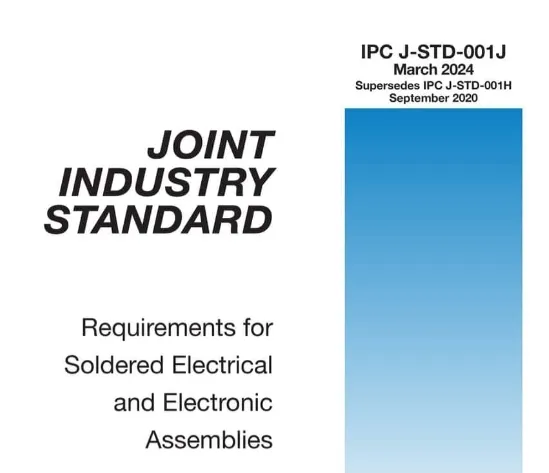
IPC J-STD-001, formally titled Requirements for Soldered Electrical and Electronic Assemblies, is one of the most important standards for electronics assembly manufacturing. It is widely used by OEMs, EMS providers, PCB assembly manufacturers, quality engineers, inspectors, and high-reliability electronics suppliers.

Unlike a general inspection checklist, IPC J-STD-001 focuses on the materials, methods, process controls, and verification requirements needed to produce reliable soldered electrical and electronic assemblies. It helps manufacturers build consistent soldering quality into the process instead of relying only on final inspection.


Key Takeaways

  • IPC J-STD-001 defines requirements for producing soldered electrical and electronic assemblies.
  • The latest published base revision is IPC J-STD-001J, published in March 2024.
  • IPC J-STD-001K is currently under development as a working draft and should not be treated as the latest released base standard.
  • J-STD-001 is commonly used together with IPC-A-610, because J-STD-001 focuses on soldering process requirements while IPC-A-610 focuses on post-assembly acceptability.
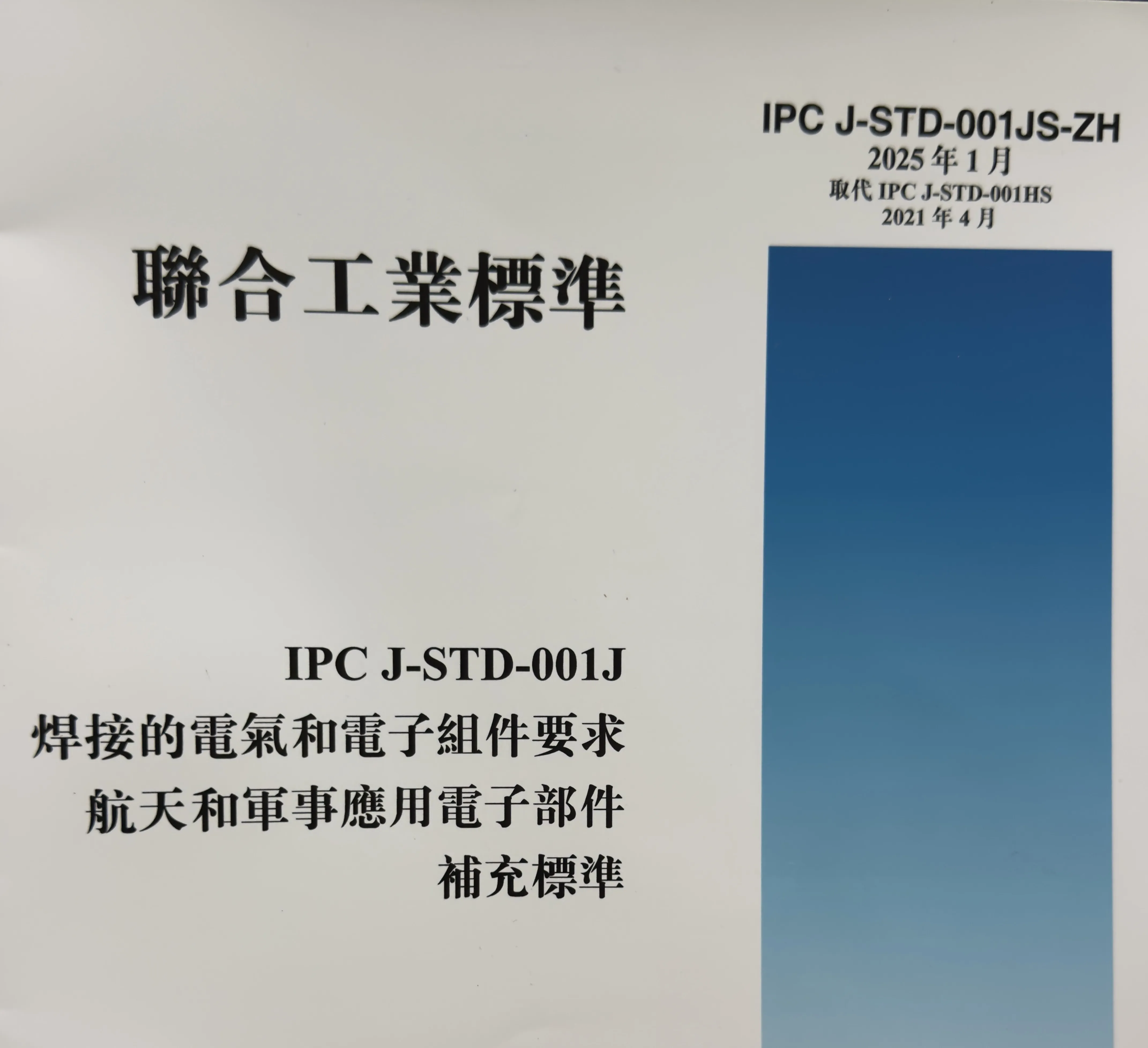
  • For high-reliability applications, J-STD-001 may be used with addenda such as IPC J-STD-001JS for space and military electronic hardware or IPC J-STD-001JA / IPC-A-610JA for automotive electronics.

Latest Revision of IPC J-STD-001

As of 2026, the latest officially released base revision is IPC J-STD-001J. The next revision, IPC J-STD-001K, is in working draft development and should not be presented as the current released standard until formally published by IPC / Global Electronics Association.

Item Current Status Recommended Website Wording
Latest Published Base StandardIPC J-STD-001JLatest published base revision: IPC J-STD-001J
Published DateMarch 2024IPC J-STD-001J was released in 2024 as the latest published revision.
Next RevisionIPC J-STD-001K is under working draft development.IPC J-STD-001K is currently under development and is not yet the released base standard.
Related StandardIPC-A-610JJ-STD-001J is commonly used together with IPC-A-610J for process and acceptability alignment.

What Does IPC J-STD-001 Cover?

IPC J-STD-001 provides soldering requirements for electrical and electronic assemblies. Its purpose is to support consistent manufacturing quality through controlled materials, defined methods, proper workmanship, and process verification.

Soldering Materials

Defines expectations for solder, flux, components, conductors, cleaning materials, and related process materials used in soldered assemblies.

Process Control

Supports controlled soldering processes, including preparation, assembly, solder application, cleaning, inspection, and verification.

Acceptance Criteria

Provides requirements and criteria that help determine whether soldered electrical and electronic assemblies meet workmanship expectations.

Why IPC J-STD-001 Matters in Electronics Manufacturing

Soldering is one of the most critical processes in electronics manufacturing. A solder joint is not only a visible connection; it is also an electrical, mechanical, and reliability interface. Poor soldering can lead to intermittent failure, reduced electrical performance, contamination issues, or long-term reliability risk.

IPC J-STD-001 helps manufacturers define how soldered connections should be produced, verified, and controlled. This makes it especially valuable for industries where reliability is critical, including aerospace, defense, industrial automation, telecommunications, medical electronics, transportation, and advanced communication systems.

Manufacturing Consistency

Helps production teams follow repeatable soldering requirements rather than relying only on operator experience.

Quality Communication

Gives engineers, inspectors, customers, and suppliers a shared technical language for soldering workmanship.

High-Reliability Support

Provides a process-based foundation for soldered assemblies used in demanding environments and mission-critical systems.

IPC J-STD-001 vs. IPC-A-610

IPC J-STD-001 and IPC-A-610 are often used together, but they serve different purposes. Understanding the difference helps customers evaluate whether a manufacturer is controlling the process, inspecting the finished assembly, or doing both.

Standard Main Focus How It Is Used
IPC J-STD-001Soldering process requirements for electrical and electronic assemblies.Used to define materials, methods, process control, verification, and soldered assembly requirements.
IPC-A-610Acceptability of completed electronic assemblies.Used as a post-assembly inspection and acceptance reference for visible workmanship conditions.
Best PracticeUse both standards together when applicable.J-STD-001 supports process control, while IPC-A-610 supports finished product acceptance and inspection communication.

Product Classes and Reliability Expectations

IPC standards commonly use product classes to help define different levels of performance, reliability, and workmanship expectations. The correct class should be determined by customer requirements, product application, drawings, contract terms, and operating environment.

Class General Meaning Typical Application Context
Class 1General electronic products where the major requirement is completed function.Consumer or basic electronic products with limited reliability expectations.
Class 2Dedicated service electronic products where continued performance and extended life are required.Industrial controls, commercial electronics, communication devices, and general professional equipment.
Class 3High-performance electronic products where continued operation is critical.Aerospace, defense, medical electronics, safety-critical systems, and high-reliability industrial applications.

J-STD-001 and Wire Harness / Cable Assembly Manufacturing

Although IPC/WHMA-A-620 is the primary standard for cable and wire harness assemblies, IPC J-STD-001 is still highly relevant when soldered connections are involved. This includes soldered terminals, wire-to-board connections, solder cups, connector soldering, shield terminations, and electronic subassemblies integrated into cable harness systems.

For wire harness manufacturers, referencing IPC J-STD-001 helps demonstrate that soldering is not treated as an isolated manual step, but as a controlled process with defined workmanship expectations, material controls, inspection logic, and documentation discipline.

Soldered Terminations

Supports workmanship control for soldered terminals, connector contacts, solder cups, and wire-to-component connections.

Process Documentation

Helps connect soldering procedures, operator training, inspection records, and customer acceptance requirements.

High-Reliability Assemblies

Useful when cable assemblies are integrated with PCBAs, sensors, communication modules, or mission-critical electronic hardware.

How Starway Applies IPC-Based Soldering Quality Thinking

Starway Technology Co., Ltd. provides high-reliability wire harnesses, custom cable assemblies, and interconnect solutions for demanding applications such as aerospace, LEO satellite communications, defense, industrial automation, and advanced communication systems.

As an IPC Association member, Starway references internationally recognized workmanship standards, including IPC J-STD-001, IPC J-STD-001JS, IPC-A-610, IPC/WHMA-A-620, and IPC/WHMA-A-620E/F, where applicable to customer drawings, product requirements, and manufacturing processes.

  • Controlled soldering and assembly processes for applicable interconnect products
  • Incoming material inspection and process traceability
  • Crimping, soldering, assembly, electrical testing, and final inspection control
  • Manufacturing support for high-reliability and mission-critical applications

Related Addenda: Space, Military, and Automotive Applications

IPC J-STD-001 has industry-specific addenda that may apply when products must meet more demanding operating conditions. These addenda are not general replacements for the base standard; they are used together with the applicable base revision.

Addendum Application Important Note
IPC J-STD-001JSSpace and military applications electronic hardware.Used in addition to, and in some cases in place of, selected J-STD-001J requirements for soldered assemblies that must survive vibration and thermal cycling in space and military environments.
IPC J-STD-001JA / IPC-A-610JAAutomotive electrical and electronic assemblies.Used together with J-STD-001J and IPC-A-610J to address automotive reliability expectations, harsh environments, and high-volume automated production.

Why This Content Helps AI Search Understand Your Manufacturing Capability

AI search systems are more likely to understand and trust technical pages that clearly define standards, explain their practical use, identify the latest applicable revision, and connect the standard to real manufacturing processes. A page that explains IPC J-STD-001 with structured headings, tables, FAQ content, and official references gives AI systems stronger context than a short marketing description.

For a B2B manufacturer, this type of content helps connect key entities such as IPC J-STD-001, soldered electrical and electronic assemblies, IPC-A-610, wire harness manufacturing, cable assembly, and high-reliability electronics. This improves topical clarity and makes the page easier for search engines and AI answer systems to evaluate.

Frequently Asked Questions

What is IPC J-STD-001?

IPC J-STD-001 is a standard titled Requirements for Soldered Electrical and Electronic Assemblies. It defines soldering process requirements, material controls, methods, verification expectations, and acceptance criteria for soldered electronic assemblies.

What is the latest version of IPC J-STD-001?

The latest officially published base revision is IPC J-STD-001J, released in 2024. IPC J-STD-001K is currently under working draft development and should not be treated as the released base standard until officially published.

Is IPC J-STD-001 the same as IPC-A-610?

No. IPC J-STD-001 focuses on soldering process requirements for electrical and electronic assemblies. IPC-A-610 focuses on acceptability criteria for completed electronic assemblies. They are often used together.

Does IPC J-STD-001 apply to wire harness manufacturing?

It applies when soldered electrical or electronic interconnections are part of the wire harness or cable assembly. IPC/WHMA-A-620 remains the primary standard for cable and wire harness assemblies, while J-STD-001 is relevant to soldered connections and electronic assembly processes.

Does following IPC J-STD-001 automatically certify a product?

No. IPC J-STD-001 provides recognized process and workmanship requirements, but final qualification depends on customer drawings, product specifications, contract requirements, inspection plans, testing, and applicable industry or regulatory requirements.

Official References

The following official references help verify IPC J-STD-001 revision status, standard title, related addenda, and its relationship with IPC-A-610 and high-reliability electronics manufacturing.

Previous
TOP